Having a hobby can add extra joy and fulfillment to your life, allowing you to step out of your comfort zone and master new skills. In some cases, though, your hobby could result in something unexpected—noise-induced hearing loss. If you enjoy playing music, hunting or tackling projects at home in your spare time, you may want to take extra precautions to protect your ears.
How Noise Affects Hearing
Noise-induced hearing loss occurs when you hear a sound that’s too loud (above 85 decibels) or when you’re exposed to it for too long. These sounds can damage the tiny hair cells in the inner ear, which are responsible for translating sound into signals the brain can understand. Unfortunately, once that damage occurs, it’s permanent.
Musicians
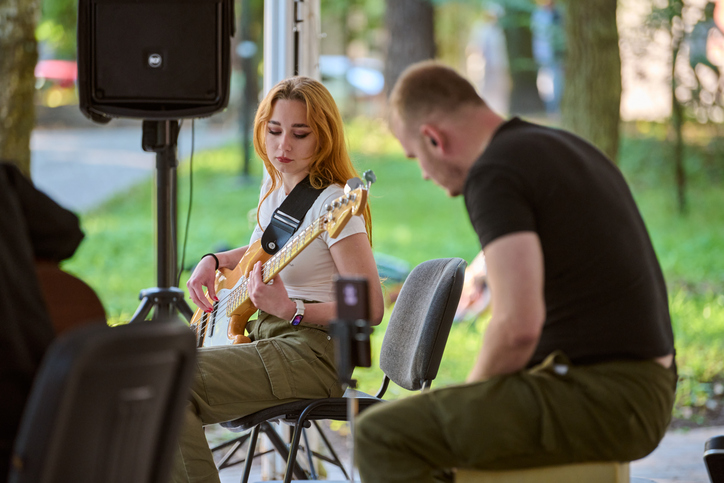
For musicians, their hobby isn’t always music to their ears. The environments they practice and perform in are consistently loud. Concerts regularly hit 100–110 decibels (dB), and standing near speakers can push that number to 120+ dB. At 100 dB, hearing damage can start after 15 minutes of noise exposure; at 110–120 dB, harm to hearing can begin in one to two minutes.
This can lead to permanent hearing loss, tinnitus or changes in how pitch and tone are perceived. For someone who depends on precise hearing, such as a musician, even subtle shifts in their hearing ability can be career-altering.
Hearing protection becomes essential for musicians during:
- Rehearsals and practice sessions
- Live performances and concerts
- Studio work with amplified sound
Hunters
Every hunter knows how critical their hearing is. It helps them track movement and stay aware of their surroundings. However, the firearms they use during the hunt produce some of the most intense noise a person will ever encounter.
Gunshots often exceed 140 decibels. At that level, even one unprotected shot can cause immediate damage. Many hunters experience shooter’s ear, a type of high-frequency hearing loss that makes speech sounds difficult to hear and may come with persistent ringing.
Hearing protection is necessary for hunters:
- Anytime a firearm is used
- At shooting ranges
- During hunting trips, regardless of how many shots you expect to take
Do-It-Yourselfers
That satisfaction you feel when making or fixing something with your own two hands? It can’t be beat! But you should take hearing-preserving precautions while doing it, as power tools, such as saws, drills and sanders, commonly operate between 90 and 110 decibels.
Your risk of hearing loss comes from repeated exposure. While a single project may not seem significant, hours spent cutting, sanding or mowing can add up quickly. Over weeks and years, that exposure can result in noticeable hearing changes.
Hearing protection is important for DIYers when:
- Using power tools of any kind
- Operating lawn equipment like mowers or leaf blowers
- Working in any setting where conversation requires raised voices
Find Your Hearing Protection Solution
While off-the-shelf earplugs at retailers will do in a pinch, comfortable, custom-fit hearing protection from us is your best bet at preserving your hearing. If you’re interested in exploring your options or want to schedule a hearing test, get in touch with our team today.